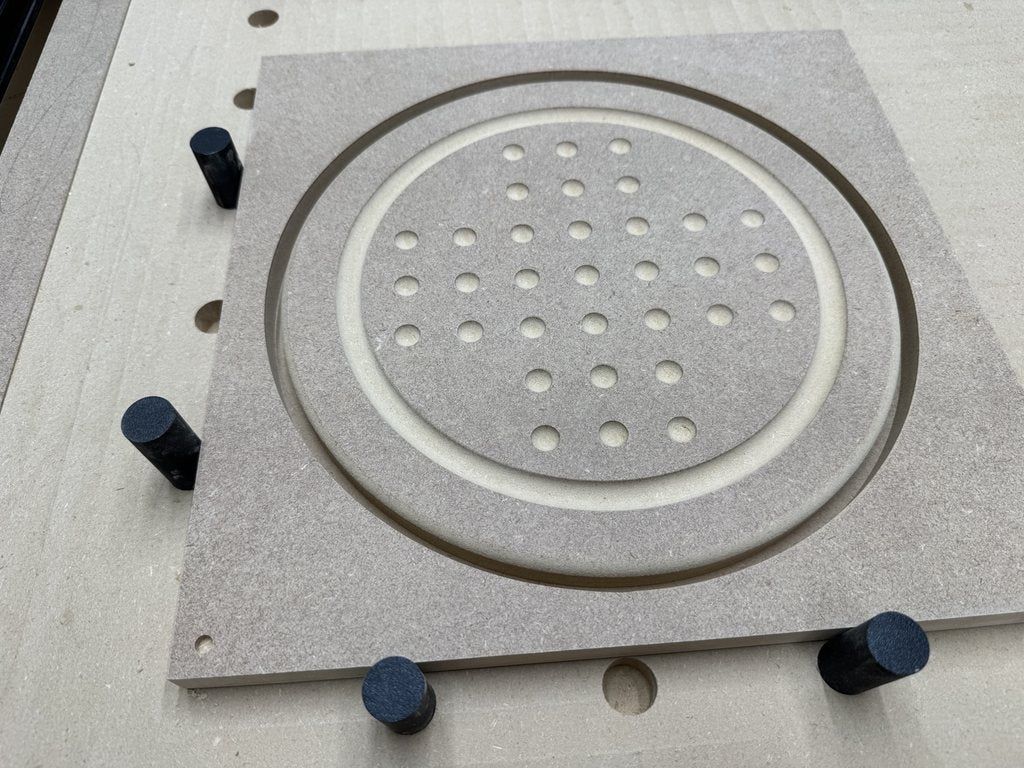
A prototype is useful when one physical answer could prevent an expensive batch mistake. It can test whether parts fit, whether details survive the cutter and material, whether assembly works, or whether a product is practical to handle and pack.
Test only what is uncertain
A small coupon may answer slot fit, engraving depth or corner relief without cutting a whole product. A full prototype is more appropriate when geometry, assembly, usability and presentation interact. Choose between a test cut and prototype.
Define a pass condition
“Looks good” is too vague for a production decision. Record the dimensions, fit, movement, orientation, appearance or packing result that would permit the next stage. Photograph and label the accepted version.
Revision loop
- Identify the riskiest assumptions.
- Choose the smallest meaningful physical test.
- Compare the result with the agreed pass conditions.
- Record changes under a new revision.
- Approve one controlled sample or data set for the next run.
What an approval record should contain
Record the prototype ID, part revision, material source, finish state and questions examined. For each question, write observed result, pass/fail decision and any change required. A photograph helps identify the sample, while dimensions or functional observations explain the decision. If a feature was not checked—such as long-term durability, final packaging or a different material lot—say so. The batch instruction can then reference a precise approval instead of “the prototype looked fine”.
Where a seller completes painting or assembly, their tested finished sample may be the meaningful reference. The raw CNC part and final seller product should not be treated as interchangeable evidence.
The solitaire prototype-to-batch workshop example shows this sequence through a settings board, physical prototype, repeated sheet layout and finished detail.
Limits
A prototype made from one sheet does not establish performance across every material lot, environment or user. It is not safety certification. Production acceptance criteria still need to be defined.
Choosing what the prototype must answer
Where the outer profile is already accepted but slot fit after paint and engraved-text legibility remain uncertain, test those two questions directly. A finish-aware slot coupon and representative engraving sample may answer them before a complete production batch.
Set the prototype questions
| Decision | Evidence to use | Consequence |
|---|---|---|
| Risk split | Treat fit and legibility as separate questions. | Each can use a small representative coupon before a full product. |
| Prototype purpose | Define assembly, handling and appearance checks in advance. | The sample is evaluated rather than merely admired. |
| Finish condition | Test raw and finished interfaces where coating matters. | Approval reflects the state used by the customer. |
| Route to batch | Name accepted revision and unresolved limits. | Repetition begins only after the intended questions are answered. |
Prototype decisions that waste a test
A prototype is ordered without pass criteria.
Write measurable or observable acceptance points before machining.
The sample uses convenient scrap instead of representative stock.
Label the material difference or use the actual board when it affects the decision.
Every iteration is called final.
Use revisions and a short change log so the accepted sample remains identifiable.
The prototype is treated as safety certification.
Keep compliance, durability and regulated-use assessment separate from machining evidence.
Prototype planning checklist
- List the costly uncertainties.
- Choose coupon or full prototype deliberately.
- Use representative material and finish.
- Provide mating hardware or dimensions.
- Define pass and fail conditions.
- Record actual observations.
- Approve one named revision.
- Carry limits into batch checks.
Prototype questions
Can a coupon replace a full prototype?
Yes when one isolated feature controls the decision and product interactions do not change it.
What if the prototype looks good but does not fit?
Function takes priority where fit is critical; record the failure and revise rather than accepting appearance alone.
Does approval guarantee every later sheet?
No. It controls geometry and decisions; production still needs material and acceptance checks.
Confirm the prototype scope
Use the workshop example to understand the sequence, then define the questions for your own prototype. Confirm its material, finish state, checks, approval point and the production stages included in the quotation.
Plan the smallest useful test
Describe the uncertainty you want to test. For fit questions, read clearance and press-fit guidance.